Part 6: Leaders Step Into the Hard Stuff So That Others Don’t Have To
Have you ever been around an avoidant leader? One who seems to bury his or her head in the sand when conflicts arise?
Maybe it’s not conflicts, but maybe it’s opportunities that seem obvious to you, but for whatever reason the leader fails to take action steps in areas that would better the organization as a whole?
Perhaps it’s stepping into a difficult conversation, or maybe it’s looking in the mirror and admitting that they made a mistake. Maybe it’s entering into an analysis that might cause them to shutter a project that’s already underway, instead committing to mediocrity (or even futility) so that they don’t have to throw away resources they’ve already spent.
It’s kind of like that poker player who, although he knows he has a losing hand, stays in the game, putting more and more money on the table, because there is some remote statistical chance that he’ll hit it big. We know what happens to these types of players. They become spectators really quickly.
Maybe it’s more innocuous than that. Perhaps they have a great idea, vocalize it, but fail to follow through or to create a strategic action plan? Maybe they have steps one and two figured out, but don’t really have a plan (or the necessary advisors) to help them think through what happens after that?
You see, the common thread here is less about skill set, competency level, or any other tangible characteristic.
The common thread is courage.
In this case, the courage to willingly step into the hard stuff, in order to avoid much larger pain points down the road.
And here’s where the irony runs so deep: Most of the time, the reason they don’t want to step into the hard stuff is because it’s too uncomfortable. What they fail to realize is that this failure to step into the hard stuff creates exponentially larger pain points (for themselves and many others) down the road.
It’s a genuine leadership tragedy, and one I see so incredibly often.
I do it more regularly than I’d like to admit.
Sure, there are some areas where I’m learning to step into the hard stuff, and still others where I bury my head in the sand, hoping the problems will go away.
The victory for me is that I’m beginning to recognize it more quickly, before things go terribly awry. I call this a win, provided I keep growing in my willingness to confront issues. (We’ll take the little victories, right? Because at least those bring us further along our growth path, which is what developing as a leader is all about.)
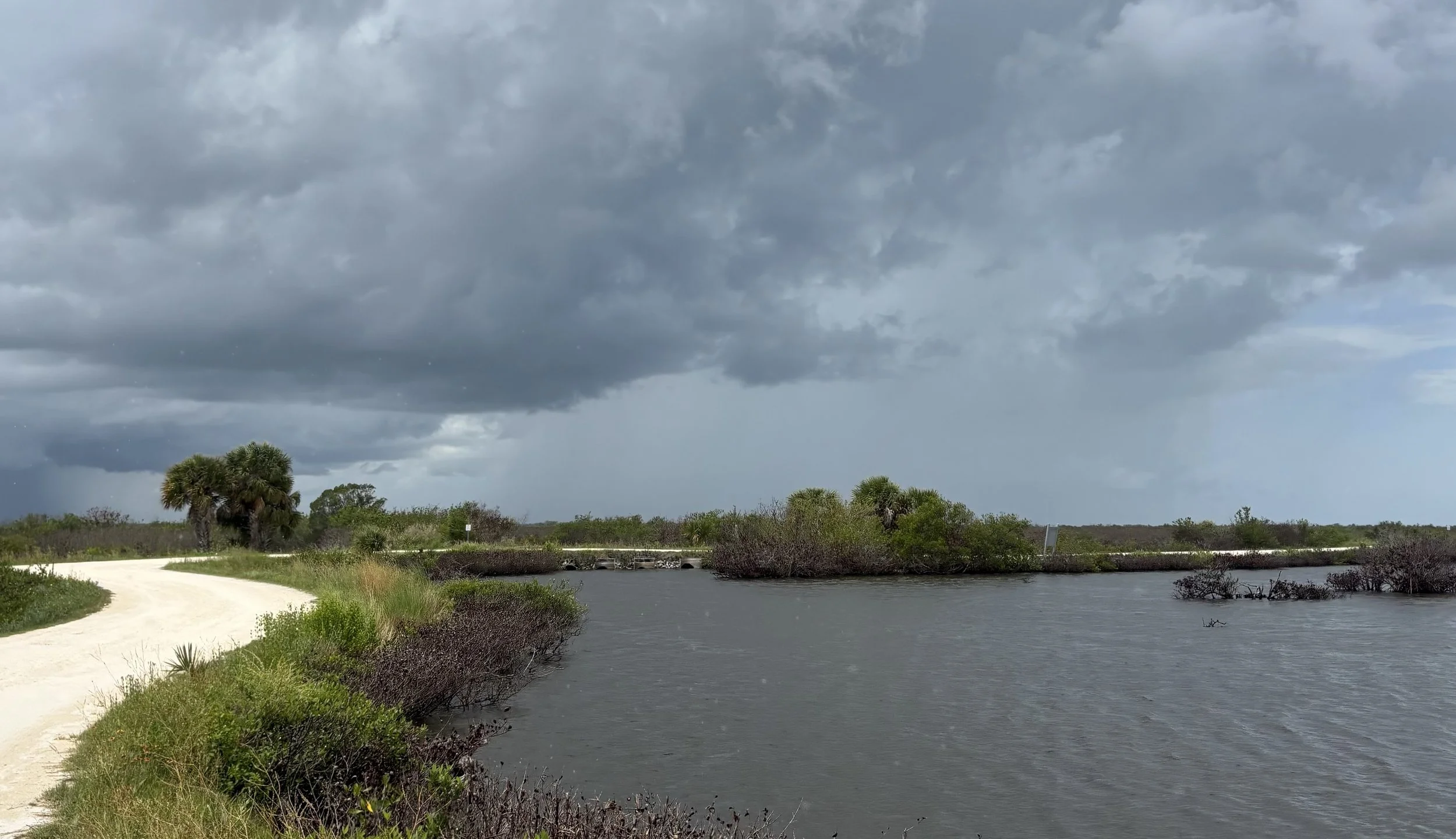
I heard an interesting story from a friend recently: He was on a retreat in Montana, and the group he was with found themselves talking about the behavior of buffalo during big storms.
When a storm rolls in, all animals (as well as you and I) tend to run away from the storm. It’s a natural survival instinct that serves us well.
What the buffalo have figured out is that, at a certain point, they aren’t going to be able to outrun the storm, and so what do they do?
They turn around, and run directly into it.
Think about that for a minute. They defy all natural survival instincts to run away, and instead run to the storm.
Because they have figured out that, by running away, the time spent in the storm is considerably longer than the time spent in the storm if they’re running into it head-on.
Such a simple idea, with so many metaphors, and so many dots to connect in our own lives. I’ll let you do the work in this area, since you know your particulars and I don’t.
But I’ll simply ask this: What would it look like to be more like a buffalo in your life right now?
Discussion Questions:
What current (or potential) storms are you facing in your life and leadership right now?
What would courage look like to turn around and face these head-on?
What would the worst possible outcome be if you kept running away from it? What would the worst possible outcome be if you ran into it?
What good thing could come out of running into the storm rather than away from it?
Who can you ask for encouragement to step more courageously into these moments?
Consider the fact that Jesus ran into the “ultimate storm” by His sacrifice on the cross, suffering the ultimate agony so that we wouldn’t have to. When is the last time you genuinely expressed your gratitude to God for this?